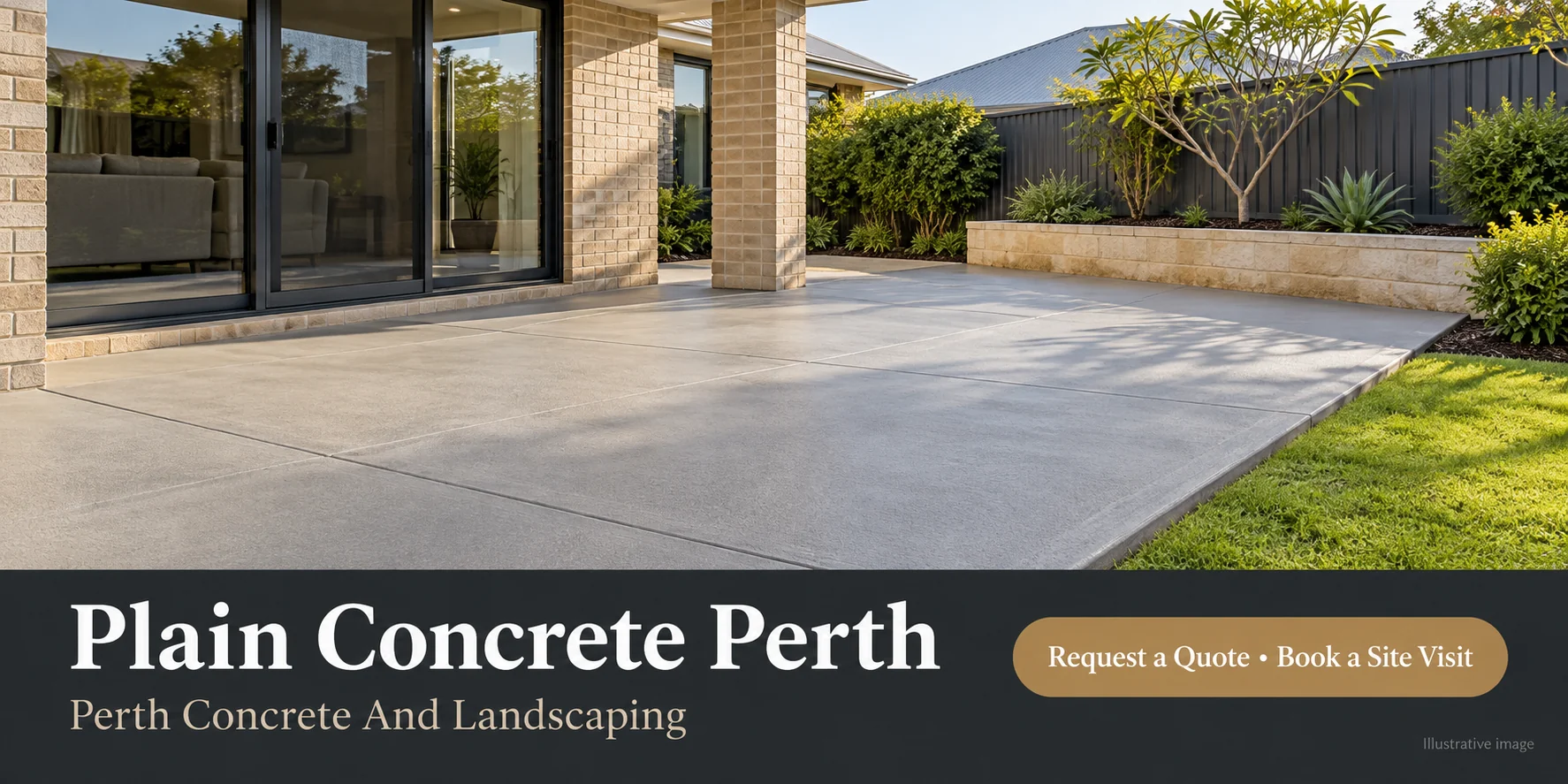
Plain Concrete Perth

Plain concrete is often considered when a property needs a simple surface without a decorative stone or colour feature. The term describes appearance, rather than a complete construction specification.

When discussing plain concrete Perth property owners should still ask about preparation, texture, drainage and the loads the area will carry.

Perth Concrete And Landscaping welcomes plain concrete enquiries. This guide helps you define the work before comparing proposals.

What Is Plain Concrete?

In everyday service enquiries, plain concrete usually means standard concrete without a decorative coloured or exposed aggregate finish. Clarify that meaning with the contractor, including the surface texture.

The word plain does not necessarily mean unreinforced. Ask the quote to state the design and reinforcement separately.

Choose the Surface Treatment

A contractor may propose different textures for different uses. Ask to see an example instead of relying on a general description such as standard finish.

The ACI exterior finish overview identifies surface texture as part of appearance and safety. Explain how the area will be used so the finish discussion has a clear purpose.

Choosing Plain Concrete for Your Project

Start with the job the surface must do. A walking route and an area used by vehicles need separate consideration.

Tell your contractor about:

Expected vehicles or equipment.

Daily walking routes.

Furniture or storage placement.

Existing surfaces to connect with.

Appearance preferences.

Any future change in use you already anticipate.

Do not compare a pedestrian path quote with a vehicle pavement quote as if only the colour differs. Ask the contractor to explain the proposed design for each area.

Preparation, Drainage and Joints

The site discussion should cover what exists beneath and around the proposed work. Show any damaged paving, old slab sections or places where water collects.

Ask how the surface will meet nearby buildings and drains. Request a clear explanation of finished levels rather than leaving them to be decided during placement.

Joints also need to be planned. The Concrete Society’s external paving joint guidance describes different joint types and the role of design in their arrangement.

Ask to see the intended layout, especially where the work has corners or connects to existing concrete. Planned joints should be part of the scope rather than treated as an unexpected visual feature.

Comparing Plain Concrete Quotes

Item What to check
Area Dimensions and boundaries
Existing material Removal and disposal
Preparation Excavation and base work
Design Proposed specification and reinforcement
Surface Texture, edges and joint layout
Site access Delivery or pumping arrangements
Drainage Included work and separate responsibilities
Handover Cleanup and first-use instructions


Ask whether all quotes cover the same work. A simple finish does not mean that every site has the same preparation needs.

Put requests about protecting gardens, gates and adjoining surfaces in writing. Also agree on how changes will be discussed if the contractor finds something unexpected during removal.

Curing and Everyday Maintenance

Arrange access around the new area until it is ready for use. Ask which curing method will be used and when people, furniture or vehicles can return.

The Concrete Society’s crack control guidance explains that curing, movement joints and reinforcement can help reduce shrinkage cracking. These measures do not justify a promise that concrete will never crack.

For maintenance, ask about cleaning and whether sealing is recommended for your intended use. Keep any product details for future care.

If cracks, movement or surface changes cause concern, ask the contractor to assess them. A photo alone may not explain their cause or significance.

Request a Plain Concrete Quote

Share photos and explain whether the area will be used for walking, parking or another purpose. For plain concrete Perth customers can plan around practical property needs, request a quote or book a site visit with Perth Concrete And Landscaping.

Frequently Asked Questions

1. Is plain concrete the same as unreinforced concrete?

Not necessarily in service descriptions. Ask for the reinforcement to be specified separately. CCAA construction guides provide background on concrete design and construction.

2. What affects the cost of plain concrete?

Area, preparation, access and design affect the scope. Ask for a written quote using WA Consumer Protection guidance.

3. Can plain concrete crack?

Yes. Ask how cracking risk will be managed. See Concrete Society guidance on reducing shrinkage cracks.

4. Does plain concrete need sealing?

Discuss its purpose and suitability for your finish. CCAA’s sealer guide explains product selection.

5. When can new plain concrete be used?

Follow the instructions for the intended loads and finish. See Concrete Society curing guidance.

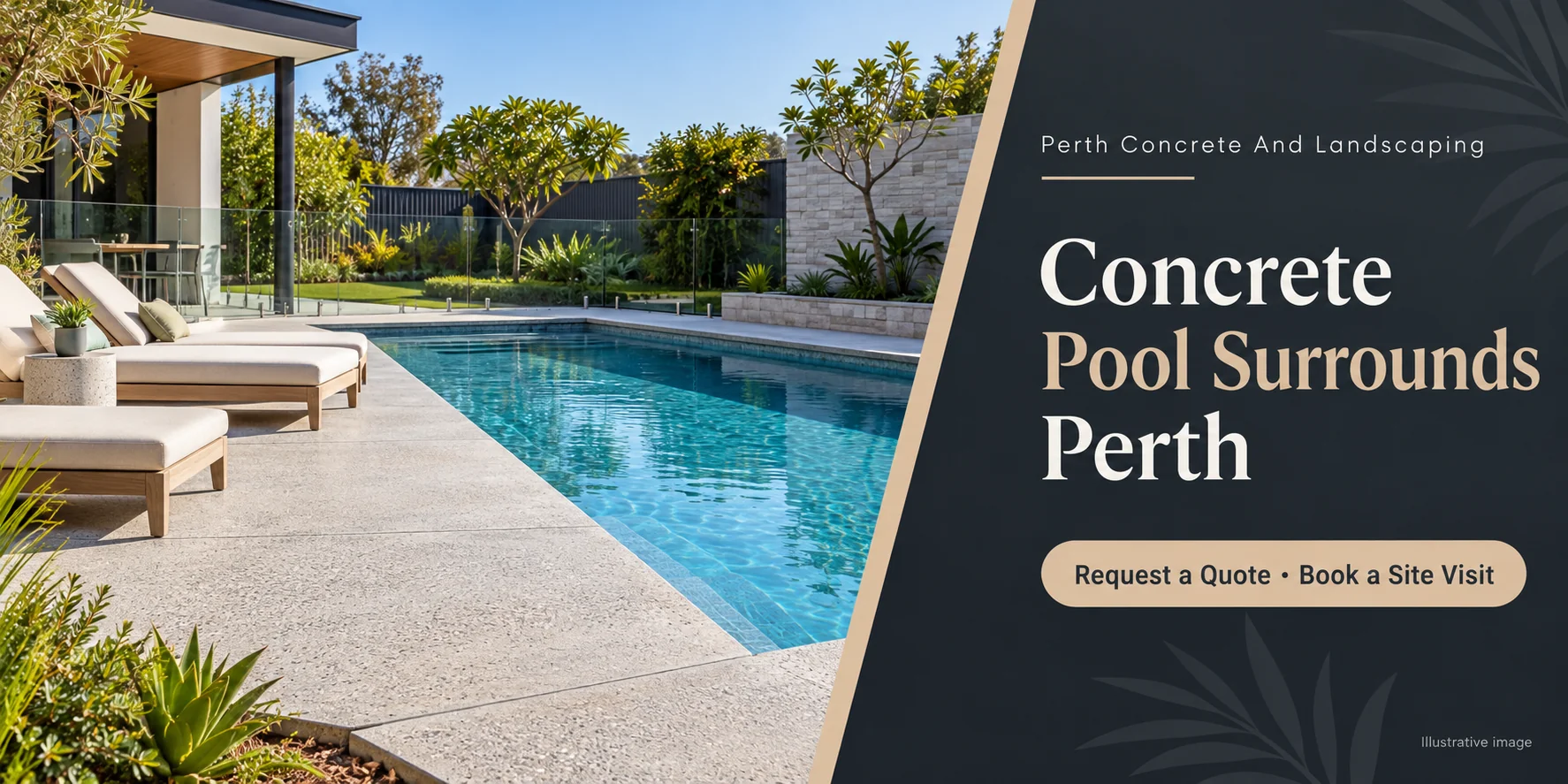
Concrete Pool Surrounds Perth

A pool surround is a walking area, a seating space and a connection between the pool and garden. It needs to work when people are wet, barefoot and moving between different parts of the yard.

Choosing concrete pool surrounds Perth families can use comfortably means looking beyond colour. Discuss wet surface suitability, drainage and the pool edge before choosing the final finish.

Perth Concrete And Landscaping welcomes pool surround enquiries. This guide helps you prepare the right questions for your contractor and pool installer.

What Matters Around a Pool?

Start with the people and activities the area will support. Where will swimmers leave the water? Where will chairs sit? Which route leads to the house?

Ask about the surface in its finished condition, including any sealer. The term concrete alone does not tell you how an area will perform when wet.

Plan for Wet, Barefoot Use

Discuss:

Walking routes and pool entry points.

Space for seating and supervision.

Surface texture under bare feet.

Water splash and drainage.

Connections to lawn, paths and the house.

Access to pool equipment and covers.

CCAA’s slip resistance guidance explains that slipping depends on the surface, environment and user. Ask for current suitability information for the proposed finished system; appearance alone is not proof of wet performance.

Comparing Pool Surround Finishes

Ask to see samples of the actual finish being proposed. Compare texture and appearance, then discuss whether it suits the intended use.

Finish discussion What to ask
Exposed aggregate What stone size and texture are proposed?
Honed concrete How will the finished system suit wet use?
Textured plain concrete What texture will be produced?
Sealed surface What changes after the selected sealer is applied?


Avoid accepting a general claim that every exposed or honed finish is suitable around every pool. Ask what supports the recommendation for your project.

Pool Edges, Levels and Drainage

The pool contractor and concrete contractor should agree on the details where their work meets. Ask who is responsible for coping, joints and the connection to the pool structure.

Bring the pool plans to the site discussion. Identify gates, drains, skimmer access and equipment routes. If work could affect the barrier, confirm the requirements before changing finished levels or nearby features.

Consult WA Building and Energy’s pool safety resources for the appropriate starting point on barrier obligations. Keep these checks in the project plan rather than leaving them until handover.

Planning Access and Installation

For an existing pool, show the contractor the surrounding surfaces and equipment. Agree on how the pool, garden and fittings will be protected during the work.

For a new pool, request a shared sequence of work. Confirm what must be finished before the concrete is placed and who gives approval to proceed.

Ask whether the quote includes removing old paving, disposing of waste and reinstating affected areas. Record the boundary of the work so pool edging and surrounding concrete are not confused.

Cleaning and Surface Care

Request instructions for the complete finish, including approved cleaners and sealer upkeep. Keep pool chemicals and maintenance activities in mind when discussing product suitability.

CCAA’s sealer guidance recommends checking products against the finish and intended use. Ask the supplier about your pool environment instead of using a product chosen only for its appearance.

Discuss Your Pool Surround Project

Share pool plans, photos and your preferred style with Perth Concrete And Landscaping. For concrete pool surrounds Perth property owners can plan around wet use and outdoor living, request a quote or book a site visit.

Frequently Asked Questions

1. Is concrete automatically slip resistant around a pool?

No. Assess the actual finish for wet use. CCAA’s guidance discusses the factors involved.

2. Can honed concrete be used around a pool?

Discuss the complete system and its wet suitability before selecting it. See Concrete Society slip guidance.

3. Should a pool surround be sealed?

Ask about a product suited to the finish and pool environment. CCAA’s sealer guide explains selection considerations.

4. Can work be done around an existing pool?

Request inspection and coordination with the pool contractor. Check relevant barrier obligations through WA Building and Energy.

5. How should the surround be cleaned?

Follow the finish supplier’s advice and manage wash water. See CCAA’s cleaning guide.

Best Concrete Contractors Perth

Choosing a concrete contractor is a decision that affects how your property looks and how well the finished area works. A neat surface matters, but so do preparation, drainage and the care taken after the concrete is placed.

If you are searching for the best concrete contractors Perth has to offer, start with evidence. Look for experience with similar projects, clear written proposals and a team willing to explain the work. The right choice depends on your site, budget and intended use.

This guide from Perth Concrete And Landscaping helps homeowners, builders, business owners and property managers ask useful questions before booking concrete work in Perth, Western Australia.

What Should You Look for in a Perth Concrete Contractor?

Choose a contractor who can explain the proposed work, show relevant completed projects and put the scope and price in writing. Ask about site assessment, insurance, scheduling and aftercare before agreeing to proceed.

Experience With Projects Like Yours

Ask for examples that match the size and use of your project. A photo of a finished surface is helpful, but it does not explain what was done beneath it.

Useful questions include:

  • Have you completed work with similar access or ground conditions?
  • What was included in the preparation?
  • Can you explain the finish used in these photos?
  • Can I speak with a recent customer?

Homeowners may want to discuss access to their garage or garden. Builders may need work timed around other trades. Businesses and property managers may need a plan for keeping occupants and visitors clear of the work area.

Reviews and Recent Customer References

Read the details in reviews, rather than relying only on a star rating. Look for comments about communication, agreed scope, site care and how questions were handled after the job.

Ask whether portfolio photos show the contractor’s own work. Where possible, request an example that has been in use for some time, as well as a recently completed project.

Insurance and Relevant Registration

Ask for current insurance details and check the requirements that apply to your job. Do not assume that every type of concrete work has the same registration or approval rules.

For work that falls within regulated building activity, check the relevant registration through WA Building and Energy. Clarify who is responsible for approvals before the work begins.

Why a Site Assessment Matters Before You Accept a Quote

Measurements alone do not describe the whole job. Site access, existing surfaces and the way the area will be used can change the proposed work.

A useful site discussion should cover:

  • The area to be concreted and its boundaries.
  • Existing concrete or other material that needs removal.
  • Access for equipment and concrete delivery.
  • Ground levels and nearby buildings.
  • Drainage and where surface water should go.
  • Underground services that need checking.
  • Pedestrian use, vehicle use or other expected loads.

Tell the contractor about any recurring puddles or movement in existing surfaces. Share plans and explain any future changes that may affect the area.

If you receive an initial price from photos, ask what still needs to be checked on site and what could change the final scope.

How to Compare Concrete Contractor Quotes

A lower total is only useful when you understand what it includes. Send each contractor the same project details so the proposals are easier to compare.

WA Consumer Protection recommends getting at least three written quotes. It also distinguishes a quote from an estimate: an estimate is an approximate price, while an accepted quote forms an agreement on the stated price and terms.

Use this table when reviewing proposals:

Item Question to ask
Area and dimensions Is the same area included in every proposal?
Removal and preparation What excavation, removal and base work are included?
Concrete specification What thickness and concrete specification are proposed, and why?
Reinforcement and joints What is included in the design and installation?
Finish Is the agreed surface finish clearly described?
Drainage How are levels and runoff being addressed?
Delivery and access Are any pump or access costs included?
Waste removal Who removes waste and cleans the work area?
Price Does the total include GST, and what is excluded?
Timing and payment What are the expected dates and payment stages?
Aftercare What instructions and follow-up support are included?

If one quote leaves an item unclear, ask for a written answer. Agree on how changes will be priced and approved before work starts.

Questions to Ask About Concrete Quality

You do not need to be a concrete specialist to ask practical questions. A clear explanation should connect the proposed method to your site and intended use.

Ground Preparation and Drainage

Ask how the existing ground will be assessed and prepared. Request an explanation of proposed levels, base materials and compaction where required.

Drainage deserves a separate discussion. Ask where rainwater will flow and how the new surface will meet nearby paths, doors and buildings. A finish sample cannot answer these questions; they need a site-specific plan.

Concrete Specifications, Reinforcement and Joints

Ask why the proposed thickness, concrete specification and reinforcement suit your project. Avoid treating a single thickness as suitable for every job.

Joints are planned breaks or separations in concrete. Their type and layout depend on the design. The Concrete Society explains that movement joints, crack control reinforcement and good curing can help reduce drying shrinkage cracking.

Ask where joints will be placed and how they will look in the finished area. Be cautious about blanket promises that concrete will never crack.

Curing and Aftercare

Curing means protecting newly placed concrete from moisture loss so it can develop its intended properties. It is part of the work, rather than simply waiting for the surface to look dry.

The Concrete Society’s curing guidance explains methods such as coverings and curing compounds. The contractor should choose a method suited to the work and conditions.

Ask:

  • How will the concrete be cured?
  • How will weather conditions affect the work?
  • When can people walk on the surface?
  • When can vehicles or other loads use it?
  • Is sealing included, and what future care is recommended?

Request written instructions. The safe time to use an area should follow the contractor’s project-specific advice, rather than a general online rule.

Warning Signs Before Hiring a Contractor

Pause and ask for clarification if the proposal contains:

  • A price with little detail about the actual work.
  • Project images with no explanation of who completed them.
  • Unclear payment stages or requests for full payment before completion.
  • No clear answer about insurance.
  • Pressure to accept before you have reviewed the terms.
  • Promises of a perfect result without checking the site.
  • No explanation of how changes or concerns will be handled.

Keep written records of agreed materials, scope and dates. Before choosing a contractor, make sure you know who will be your contact during the project.

Discuss Your Project With Perth Concrete And Landscaping

Planning concrete work in Perth? Contact Perth Concrete And Landscaping to discuss your property, the area you want to improve and your preferred finish.

Share photos, approximate measurements and any plans you already have. Explain how the area will be used and whether you have a target completion date.

When comparing the best concrete contractors Perth offers, use the same questions for every proposal. Clear information makes it easier to choose a team that suits your project. Request a quote or book a site visit with Perth Concrete And Landscaping.

Frequently Asked Questions

1. How do I choose the best concrete contractors in Perth?

Compare relevant completed work, references, insurance and clear written proposals. Ask how each team would approach your site. WA Consumer Protection’s hiring guidance is a useful starting point.

2. What should a concrete contractor’s quote include?

Look for the job description, materials, labour, timing, total price and terms. For your concrete project, also clarify preparation, finish, access costs and exclusions. See WA guidance on written quotes.

3. Should a contractor inspect the site before quoting?

A site assessment helps resolve questions about access, levels and existing conditions. If an initial estimate is given remotely, ask what remains subject to inspection. WA Consumer Protection explains the difference between estimates and quotes.

4. How can I check a contractor’s experience and insurance?

Request comparable project examples, recent references and current insurance details. Verify relevant registration where required for the work. Refer to WA Building and Energy’s homeowner resources.

5. What should I ask about curing and concrete aftercare?

Ask which curing method will be used, when the area can take its intended loads and what care the finish needs. The Concrete Society’s curing guidance explains why moisture protection matters after placement.

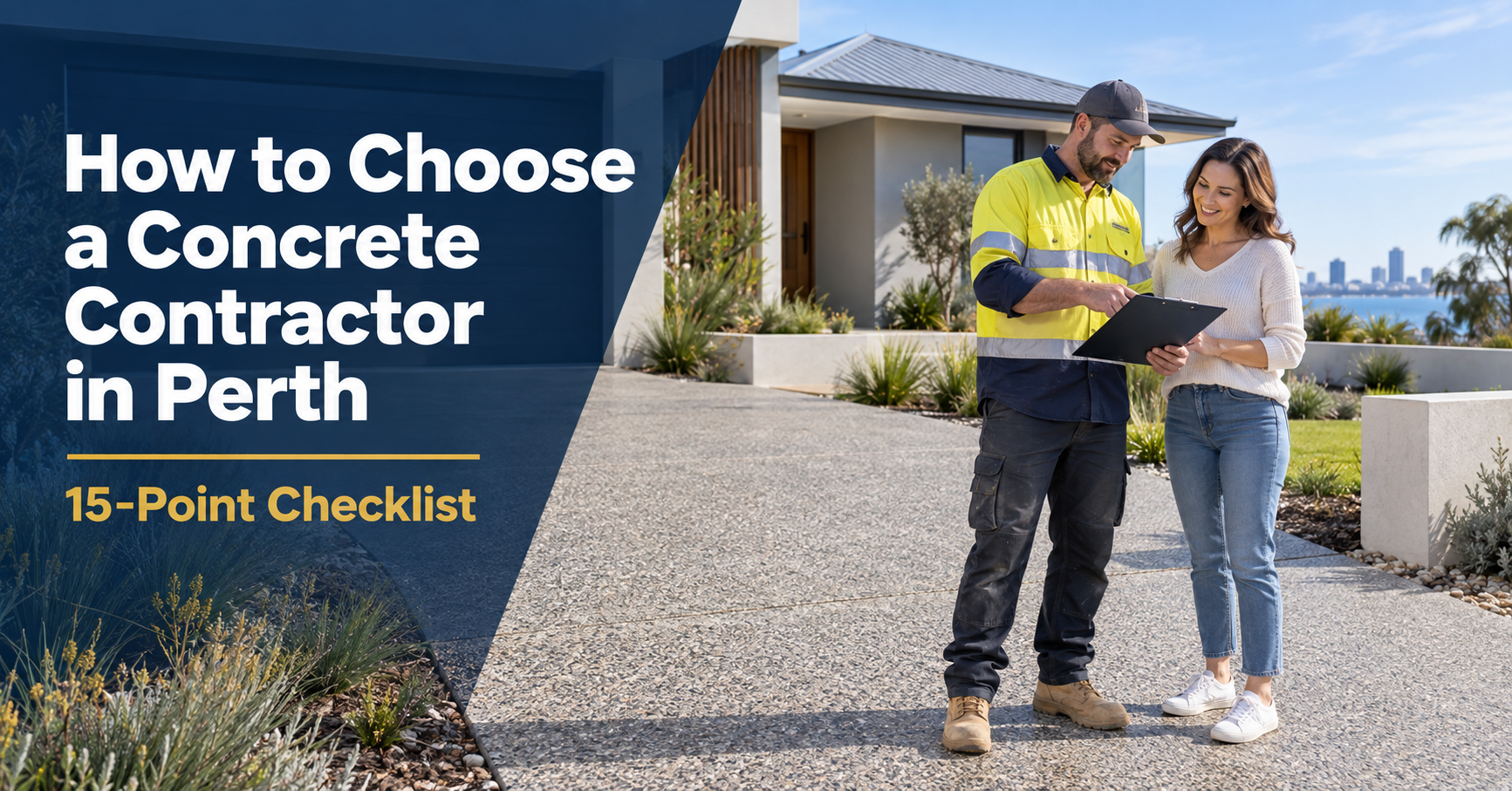
How to Choose Reliable Concrete Contractors in Perth

Choosing a concrete contractor is not only about finding the lowest quote. The quality of the site preparation, concrete mix, reinforcement, drainage, finishing and curing can affect how the finished surface looks and performs.

For homeowners, builders, property managers and commercial property owners, the right contractor should offer clear advice, a detailed scope of work and proof that they can complete the job safely.

This guide explains what concrete contractors do, the residential services they provide and the checks you should make before hiring a contractor in Perth.

What Does a Concrete Contractor Do?

A concrete contractor plans, prepares, pours and finishes concrete surfaces. Their work may include driveways, pathways, patios, pool surrounds, shed slabs, garage slabs and decorative concrete.

A professional concreting project usually includes:

  • Inspecting and measuring the site
  • Checking access, ground conditions and drainage
  • Removing existing concrete or soil when required
  • Preparing and compacting the base
  • Installing formwork and reinforcement
  • Ordering and placing the specified concrete
  • Creating falls, joints and the selected surface finish
  • Curing the concrete and protecting it while it gains strength
  • Cleaning the work area and completing a final inspection

The Guide to Concrete Construction from Cement Concrete & Aggregates Australia covers concrete materials, specification, placement and performance. It shows why the completed surface is only one part of a sound concreting job.

Residential Concrete Services in Perth

Concrete contractors may offer several services. Ask whether the contractor has recent experience with the type of project you need.

Concrete driveways and crossovers

A driveway must handle vehicle traffic while directing water away from the house and other structures. The quote should explain the excavation, base preparation, slab thickness, reinforcement, surface finish, joints and drainage included in the work.

The section between a property boundary and the road is normally called a crossover. Approval rules differ between councils. For example, the City of Perth requires crossover approval before that work starts.

Pathways and entrance areas

Concrete paths can provide clean, low-maintenance access around a property. The layout should account for doors, garden beds, gates, downpipes and natural water flow. Discuss the proposed width, falls, finish and connection points during the site visit.

Patios and outdoor entertaining areas

A patio needs a practical layout and a finish suited to outdoor use. Planning may include furniture locations, steps, nearby landscaping, drainage and links to the house. Decorative choices include coloured concrete, exposed aggregate and honed finishes.

Pool surrounds

Pool surrounds need careful set-out and drainage. Ask how the new work will meet the pool edge, fences, gates and nearby paving. Surface texture and ongoing care should also be discussed before selecting a finish.

Shed and garage slabs

Slab requirements depend on the structure and its intended loads. The contractor should work from the relevant plans or specifications and confirm the earthworks, base, formwork, reinforcement and concrete included in the quote.

Decorative concrete

Decorative concrete can change the colour and texture of an outdoor area. Common choices include exposed aggregate, coloured concrete, honed concrete and sealed finishes. View completed projects in person where possible, because online photographs may not show the exact colour or texture.

Concrete removal and replacement

Badly cracked, sunken or poorly drained concrete may need removal. Ask how the old material will be taken away, how the cause of the damage will be checked and how the replacement area will connect with existing surfaces.

Why the Right Concrete Contractor Matters

Concrete hardens into a permanent surface, so errors can be costly to repair. A good-looking finish will not correct a weak base, poor drainage or unsuitable joint placement.

An experienced contractor should be able to explain:

  • How the ground will be excavated and compacted
  • Which base material will be used
  • How water will move across and away from the slab
  • What concrete specification is proposed
  • Where reinforcement and joints will be placed
  • Which finish suits the area
  • How the concrete will be cured
  • When people and vehicles can use the surface

Clear answers do not guarantee a problem-free project, but they help you compare contractors using the same project requirements.

15 Checks Before Hiring Concrete Contractors in Perth

1. Confirm the contractor’s business details

Ask for the legal business name, ABN, contact details and business address. Check that the name on the quote matches the person or company taking responsibility for the work.

2. Check whether builder registration applies

Not every small concreting job has the same registration requirements. In WA, builder registration can apply when work requires a building permit and passes set value thresholds. The WA Government builder registration guide explains the current rules.

If registration applies, search the relevant public register and check that the details are current.

3. Ask for proof of insurance

Request a current certificate of currency for public liability insurance. Depending on the job, other insurance or workers compensation cover may also be relevant. Check the insured name, policy period and level of cover.

4. Review similar completed projects

Ask to see recent driveways, patios, paths or slabs similar to your project. Look at the edges, drainage, surface consistency, joints and how the concrete meets other areas.

5. Speak with recent customers

Ask whether the contractor can provide references. Useful questions include:

  • Did the work start and finish close to the agreed dates?
  • Were changes explained before extra work began?
  • Was the final price consistent with the agreed scope?
  • Was the site left clean?
  • How did the contractor respond to any problems?

6. Request an on-site inspection

A site visit lets the contractor check measurements, access, levels, soil, demolition needs and drainage. It also gives you a chance to ask how the work will be carried out.

7. Get a detailed written quote

The quote should identify what is included and excluded. Ask for details covering:

  • Total area and measurements
  • Removal and disposal of existing material
  • Excavation depth and base preparation
  • Formwork and reinforcement
  • Concrete specification and proposed thickness
  • Surface finish, colour and sealer
  • Drainage and falls
  • Joint locations
  • Permit or council fees
  • Site access and protection
  • Cleanup and waste removal
  • Payment stages
  • Warranty or defect process

8. Compare the scope, not only the total

Two quotes may describe very different jobs. One may include removal, extra base preparation, reinforcement or sealing while another leaves those items out. Compare every line before deciding which proposal offers better value.

9. Ask who will complete the work

Find out whether the person quoting the project will be on site and whether subcontractors will be used. Ask who will supervise the work and who you should contact during the project.

10. Confirm permits and council approvals

Permit needs depend on the project and local government area. WA Building and Energy advises property owners to contact their local government about application requirements and local laws. See the WA building approvals guidance.

The written scope should state who will apply, supply drawings and pay fees.

11. Discuss site preparation

Ask the contractor to explain how much material will be removed, how the subgrade will be checked and how the base will be compacted. If soft ground, tree roots, old fill or poor drainage is found, ask how any extra work will be priced and approved.

12. Ask about reinforcement and joints

The contractor should explain the proposed reinforcement and joint layout. These details should suit the slab’s use, dimensions and design requirements. Avoid treating reinforcement or joints as a one-size-fits-all item.

13. Check the silica-dust controls

Cutting, drilling or grinding concrete can release respirable crystalline silica. Safe Work Australia states that concrete can contain crystalline silica and that processing it can create hazardous dust.

Ask how the contractor will control dust, protect people nearby and clean the site. Wet methods, suitable extraction and correct protective equipment may form part of the work method.

14. Put payment stages and changes in writing

Do not rely on verbal promises. The contract should set out the price, payment stages, scope and process for changes.

For home-building contracts covered by WA law, contracts must be written and signed, deposits are restricted, and progress payments must relate to work already completed. Current details are available in the WA Government guide for building or renovating a home.

WA guidance also states that covered contract changes must be written, dated and signed before the changed work begins. See the obligations for registered building service providers.

15. Complete a final inspection

Walk through the project before the final payment. Check the completed area against the written scope. Record any agreed corrections in writing and keep copies of the quote, contract, variations, invoices, permits and care instructions.

Questions to Ask During the Site Visit

Take these questions to each appointment:

  1. What site preparation does this project need?
  2. How will you manage drainage and surface falls?
  3. What concrete specification and slab thickness do you propose?
  4. What reinforcement will be used?
  5. Where will the joints be placed?
  6. Which finish best suits this area and how should it be maintained?
  7. Do I need a permit or crossover approval?
  8. Who will arrange approvals and inspections?
  9. How will you manage dust, noise and access?
  10. What could cause the price or schedule to change?
  11. How will changes be approved?
  12. What curing process will be used?
  13. When can the area take foot or vehicle traffic?
  14. What warranty or defect terms are included?
  15. Who will supervise the project?

Warning Signs When Comparing Contractors

Be cautious when a contractor:

  • Refuses to provide a written quote
  • Will not supply business or insurance details
  • Cannot explain the preparation work
  • Gives no details about drainage, reinforcement or joints
  • Requests a payment structure that does not match applicable WA rules
  • Pushes you to approve the job immediately
  • Wants changes agreed only by phone
  • Offers no recent project examples
  • Gives unclear warranty terms
  • Provides a price far below other quotes without explaining why

A low price may be genuine, but you should know whether materials, preparation or cleanup have been removed from the scope.

How Much Does Residential Concreting Cost in Perth?

There is no reliable single price for all Perth concreting projects. The final quote can change based on:

  • Total area and concrete volume
  • Site access
  • Demolition and disposal
  • Excavation and base preparation
  • Ground conditions
  • Reinforcement
  • Concrete specification
  • Surface finish and colour
  • Pumping or special equipment
  • Drainage work
  • Steps, curves and detailed formwork
  • Council applications or permits
  • Sealing and aftercare

Ask at least two or three contractors to quote the same written scope. This makes it easier to identify missing items and understand large price differences.

Perth Permits, Contracts and Local Requirements

Building permits and local rules

Your local government assesses building permit applications and can explain local requirements. Never assume that approval in one Perth council area means the same rule applies in another.

Driveway crossover approval

A crossover connects private property with the road through the verge. Councils may set requirements for width, location, levels, nearby trees and public infrastructure. Confirm approval needs before booking the pour.

Written contracts and payments

WA’s Home Building Contracts Act protections apply to certain residential work. Government guidance states that covered contracts from $7,500 to $500,000 must be written and signed. It also states that the maximum deposit is 6.5% and that progress payments must cover work performed. Check the latest rules for your project before signing.

Home indemnity insurance

Home indemnity insurance may be required for residential building work that needs a building permit and is valued above $20,000. Some associated work has different treatment. The WA Government homeowner guide explains when the cover may apply and what certificate the builder must provide.

These rules depend on the type, value and approval status of the work. Seek guidance from WA Building and Energy or your local council if you are unsure.

Concrete Finish Options for Perth Properties

Plain concrete

Plain concrete offers a simple finish for utility areas, paths and some driveways. Ask whether the surface texture and appearance suit the location.

Coloured concrete

Colour can help the surface match a home or landscape design. Ask to view physical samples and completed work, as colour can look different under changing light.

Exposed aggregate

Exposed aggregate reveals selected stones at the surface. Aggregate choice, exposure level, sealing and workmanship all affect the final appearance.

Honed concrete

Honing creates a smoother decorative finish by grinding the surface. Ask where the contractor recommends using it and what care it needs.

Sealed decorative concrete

A sealer can change appearance and maintenance needs. Ask about the product, finish, reapplication schedule and care instructions before the job begins.

Why Local Perth Experience Helps

A contractor with recent Perth experience should understand local council processes, common site-access issues and the planning needed for outdoor concrete work. Local experience can also help when coordinating material supply, equipment and project timing.

Do not rely on the word “local” alone. Ask for recent projects, clear documentation and direct answers about your site.

Book a Detailed On-Site Concreting Quote

The best quote starts with a clear view of the property and the work required. Perth Concrete and Landscaping can inspect your site, discuss suitable concrete options and prepare a written quote for your project.

Book an on-site visit to discuss your driveway, pathway, patio, pool surround, slab or other residential concrete work in Perth.

Frequently Asked Questions

1. How do I choose a reliable concrete contractor in Perth?

Check the contractor’s business details, relevant registration, insurance, recent work and customer references. Request an on-site inspection and a detailed written scope covering preparation, concrete, reinforcement, joints, drainage, finish, payments and warranty terms. The WA Government registration guide explains when registered building contractors are required.

2. What should a concrete quote include?

A strong quote should list measurements, demolition, excavation, base preparation, reinforcement, concrete specifications, finish, drainage, joints, approvals, waste removal, payment stages and warranty terms. It should also show exclusions and explain how extra work will be approved.

3. Do I need council approval for a concrete driveway in Perth?

Approval depends on the work and local council. A crossover on council-controlled land often needs approval. The City of Perth, for example, requires approval before crossover work starts. Contact the council responsible for your property for the rules that apply there.

4. How long should new concrete cure before it is used?

The required waiting time depends on the concrete, weather, slab design and intended use. Foot traffic and vehicle traffic may have different timeframes. Follow the contractor’s written instructions and do not use the surface early. CCAA provides a dedicated concrete curing data sheet explaining why curing affects concrete quality.

5. What payment rules apply to concrete work in WA?

The answer depends on the type and value of the contract. For home-building contracts covered by WA law, government guidance states that deposits cannot exceed 6.5% and progress payments must relate to completed work or supplied materials. Review the current WA contract guidance before signing.