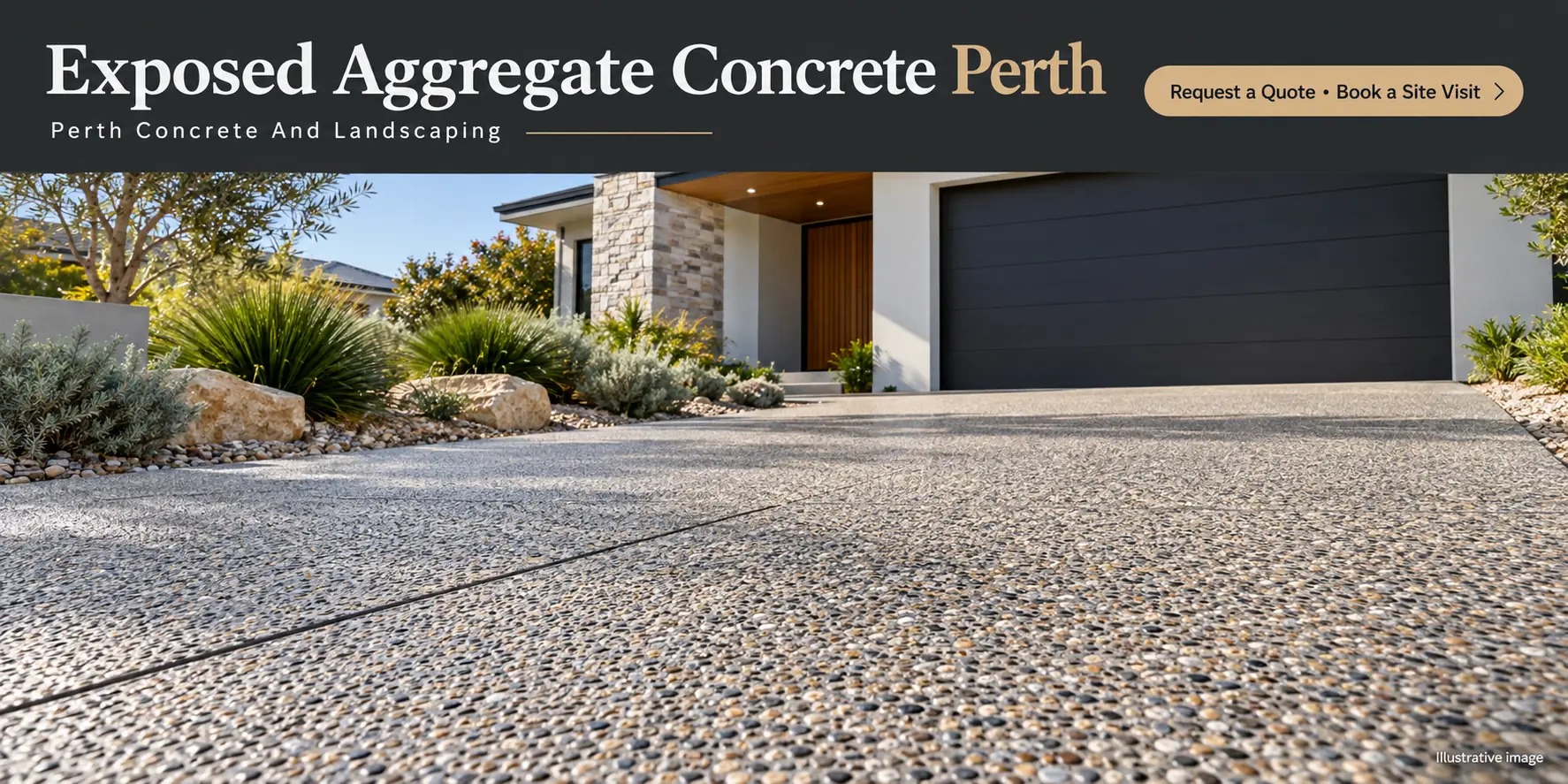
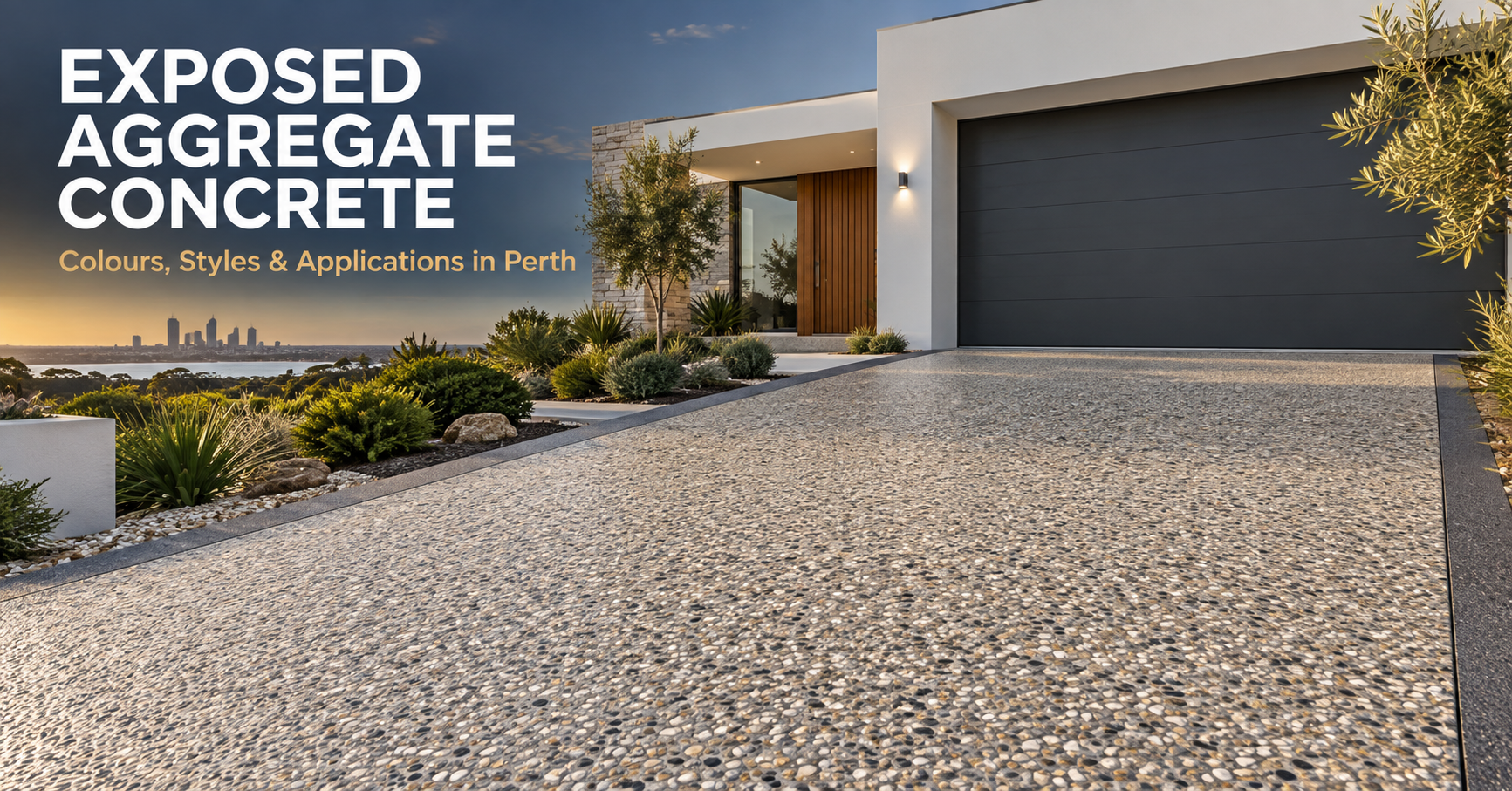
Exposed aggregate concrete is decorative concrete with the surface layer removed to reveal the stones inside the mix. The result is a textured finish with more colour and visual detail than standard grey concrete.
For Perth properties, it can be used across driveways, paths, pool surrounds, patios, entrances and commercial outdoor areas. A wide choice of aggregate and base colours also makes it easier to match the concrete with a home, development or business site.
This guide explains how exposed aggregate concrete is made, where it can be used and how to choose a finish that suits your property.
What Is Exposed Aggregate Concrete?
Concrete is usually made from cement, water, sand and aggregate. Aggregate is the stone or gravel within the mix. On standard concrete, the top surface is finished so the stones remain covered. With exposed aggregate concrete, a thin layer of cement paste is removed from the surface to reveal the selected stones.
The visible aggregate provides natural colour, pattern and texture. Suppliers such as Boral offer exposed aggregate ranges made with different Australian stones and concrete base colours.
How is the exposed finish created?
A typical installation follows these stages:
- The site is excavated and prepared to the required levels.
- Formwork, drainage provisions and reinforcement are installed where specified.
- The selected concrete mix is poured and levelled.
- A surface treatment is applied to control how the top layer sets.
- The surface paste is carefully washed away to expose the stones.
- The concrete is allowed to cure.
- A suitable sealer may be applied after the required curing period.
Timing matters during the exposure stage. Washing too early may loosen the stones, while washing too late can make it hard to achieve an even finish. This is one reason decorative concrete should be installed by a contractor with relevant project experience.
Why does every surface look different?
The final appearance depends on several choices:
- Aggregate colour, shape and size
- Concrete base colour
- Depth of exposure
- Mix placement and finishing
- Sunlight, shade and moisture
- Sealer type and finish
Natural stone can vary slightly between batches. A sample is useful for selecting a general colour direction, but it may not reproduce every detail of the finished slab.
Why Is Exposed Aggregate Concrete Popular in Perth?
Exposed aggregate concrete gives property owners a decorative surface without relying on a printed pattern. The colour comes from the concrete base and the real stones revealed at the surface.
It works with many Perth building styles, from coastal homes with pale exterior colours to modern buildings with charcoal roofs, dark frames and sharp landscape lines.
More visual detail than plain concrete
Plain concrete creates a simple and uniform surface. Exposed aggregate adds visible stones, colour variation and texture. This can turn a large driveway or entrance into part of the property’s exterior design.
A broad choice of colours
Mixes may contain white, cream, grey, brown, charcoal or mixed stones. The base concrete can also be coloured. These options allow the surface to complement brick, render, roofing, stone cladding, fencing and garden features.
Options for residential and commercial sites
The finish can be specified for houses, new developments, strata properties, shops, offices and shared outdoor spaces. The design and construction details still need to match the site, traffic and intended use.
Where Can Exposed Aggregate Concrete Be Used?
Driveways
An exposed aggregate driveway can add colour and texture to a large part of the front elevation. A mix can be selected to complement the roof, garage door, exterior walls and landscaping.
Borders can be added to frame the driveway or connect it with nearby paths. Control joints can also be planned as part of the layout rather than treated as an afterthought.
Where a driveway meets a road, the crossover may be subject to local requirements. Perth projects should be checked with the relevant local government or road authority. Main Roads Western Australia also publishes driveway guidance for roads under its control.
Paths, walkways and entrances
Paths often link several exterior materials. An aggregate mix can help tie together the driveway, front steps, garden walls and entry area. It may also be used to create a visible route from a parking area to a building entrance.
Patios and alfresco areas
Exposed aggregate can form a continuous outdoor surface around entertaining and dining areas. Neutral mixes can sit quietly beside furniture and planting, while darker or mixed-stone finishes can create stronger contrast.
Pool surrounds
The textured appearance suits many pool designs, but appearance is not the only requirement. Drainage, surface temperature, bare-foot comfort and slip resistance must be reviewed for the planned use.
Australia uses AS 4586 for the slip-resistance classification of new pedestrian surface materials. A contractor or project designer should help determine the right specification for a wet area rather than assuming that every exposed finish has the same performance.
Courtyards, garden areas and steps
The finish can be used for courtyards, garden paths, landings and steps. Matching or related mixes can visually connect these smaller spaces with the main driveway or patio.
Commercial and strata areas
Possible uses include building entrances, shared paths, outdoor dining areas, courtyards and pedestrian zones. Commercial and strata projects may have added requirements for access, traffic, drainage, safety, approvals and maintenance. These requirements should be recorded before the mix and finish are selected.
Exposed Aggregate Colours and Design Options
Light and neutral mixes
White, cream, sand and pale-grey stones can suit light render, coastal colour schemes and green landscaping. Lighter mixes may create a softer look across broad areas, although the actual heat and surface performance depend on the complete mix and site conditions.
Dark and charcoal mixes
Dark stones or a charcoal base can complement modern buildings, black window frames and dark garage doors. They can also produce a strong contrast beside light walls or pale landscape features.
Natural and mixed-stone finishes
Mixed stones create more colour variation across the slab. This can suit gardens and buildings that already use timber, brick or natural stone. Because the surface contains real aggregate, some variation is part of the finished character.
Concrete base colours
The base colour changes the way the exposed stones are seen. Pale aggregate in a dark base can appear bold and clear. Similar-toned stones and base concrete create a quieter, more blended finish.
Borders, bands and saw-cut patterns
A border may be made from plain concrete, coloured concrete or a contrasting aggregate mix. Bands can define parking areas, frame an entrance or separate a driveway from a path. Planned saw cuts can support the slab design while creating clean visual lines.
How to Choose the Right Finish for Your Property
Match the main exterior colours
Start with the fixed parts of the property:
- Roof and gutters
- Brick or render
- Garage door
- Window and door frames
- Fencing
- Retaining walls
- Existing stone or paving
The concrete does not need to match every colour. It can pick up one main tone or provide controlled contrast.
View physical samples outdoors
Screen colours can change between devices. Small indoor samples may also look different under Perth sunlight. View physical samples outside and check them in sun and shade when possible.
Look at complete projects
A close-up image shows the stones, but it does not show how the mix reads across a full driveway or patio. Ask to see completed work from several distances. Look at the edges, joints, transitions and overall colour balance.
Plan connections between areas
Decide whether the driveway, path, patio and pool area should use one mix or related finishes. Using the same mix can create continuity. Using a second colour or border can separate areas without making the property look disconnected.
Check the surface when dry and wet
Many aggregates appear darker when wet or sealed. Ask how the chosen sealer may affect colour and sheen. This is especially useful for pool surrounds, shaded areas and places exposed to irrigation.
Exposed Aggregate Compared With Other Concrete Finishes
| Finish |
Appearance |
Common reason for choosing it |
| Exposed aggregate |
Visible stone with natural colour variation |
Decorative texture and a custom mix selection |
| Plain concrete |
Uniform grey surface |
Simple appearance and fewer decorative choices |
| Coloured concrete |
More uniform colour through or over the surface |
Colour without exposed stones |
| Honed concrete |
Smoother surface with aggregate visible |
Refined decorative appearance in suitable areas |
| Concrete paving |
Individual units with repeated joints |
Pattern choice and unit-based layout |
The right finish depends on the setting, desired appearance, surface requirements, budget and maintenance plan.
What Affects the Cost of Exposed Aggregate Concrete in Perth?
There is no single price that fits every exposed aggregate project. A written quote should reflect the actual site and design.
Main cost drivers include:
- Total concrete area
- Existing surface removal
- Excavation and disposal
- Access for workers and equipment
- Ground and base preparation
- Concrete thickness and specification
- Reinforcement
- Aggregate and base-colour selection
- Curves, steps, borders and detailed formwork
- Drainage and level changes
- Sealing
- Local approval or crossover requirements
A low headline rate may not include every stage. Ask for a written scope that states what preparation, concrete work, finishing, sealing and clean-up are included.
What to Ask an Exposed Aggregate Concrete Contractor
Use these questions during a site visit:
- Can you show me completed exposed aggregate projects?
- Can I view physical samples outdoors?
- Which colours will work with my building and landscaping?
- What site preparation is included in the quote?
- How will you manage levels and drainage?
- What reinforcement and concrete specification are proposed?
- Where will control joints and saw cuts be placed?
- Is sealing included, and what finish will the sealer create?
- Are council or crossover checks needed?
- What care is required after installation?
The answers should appear in the written scope where they affect price, appearance or construction.
Planning an Exposed Aggregate Concrete Project in Perth
Book a site assessment
An on-site visit allows the contractor to measure the area and inspect access, existing surfaces, levels, drainage and adjoining structures. Builders and property managers can also use the visit to confirm staging and access needs.
Approve the design and scope
The project documents should identify the chosen aggregate mix, base colour, borders, project area and sealer. They should also record removal work, preparation, drainage provisions and exclusions.
Confirm local requirements
Rules can differ between Perth local governments. Confirm any crossover, verge, drainage, traffic or access conditions that apply before work begins.
Review the completed work
At handover, check the agreed areas, edges, joints and transitions. Ask for clear instructions on access, curing, cleaning and future sealing.
Why Choose Perth Concrete And Landscaping?
Perth Concrete And Landscaping can help property owners, builders, developers and property managers plan exposed aggregate concrete that works with the wider outdoor design.
The process can include:
- An on-site assessment in the Perth region
- Help reviewing aggregate and colour options
- Planning for driveways, paths, patios, pool surrounds and commercial areas
- Coordination between concrete and surrounding landscape elements
- A written quote based on the selected scope
The best mix should suit the property, the planned use and the wider landscape design. A site visit also helps identify preparation, access, levels and drainage needs before pricing is confirmed.
Contact Perth Concrete And Landscaping to request a quote, book an on-site visit or discuss your exposed aggregate concrete project in Perth.
Frequently Asked Questions
1. What is exposed aggregate concrete?
Exposed aggregate concrete is concrete finished so the stones within the mix are visible at the surface. Removing a thin layer of surface paste reveals the aggregate and creates a textured, decorative appearance. Product ranges such as Boral Exposé demonstrate how stone and base-colour choices can produce different finishes.
2. What colours are available for exposed aggregate concrete?
Options may include white, cream, sand, brown, grey, charcoal and mixed stones. The concrete base can also be coloured, so the same aggregate may look different in a light or dark base. Availability varies by supplier and location.
3. Where can exposed aggregate concrete be installed?
Common applications include driveways, paths, entrances, patios, pool surrounds, courtyards, steps and commercial pedestrian areas. The slab design and surface specification should suit the traffic, drainage and conditions at each location.
4. Does exposed aggregate concrete need to be sealed?
A compatible sealer is often used to support surface care and alter the final colour or sheen. The right product and application schedule depend on the concrete, exposure level, location and desired appearance. Follow the concrete supplier’s and sealer manufacturer’s written instructions.
5. How do I choose the right exposed aggregate mix for my Perth property?
Compare physical samples with your roof, walls, garage door, fencing and landscaping. View the samples outdoors, ask to see completed projects and check how the mix looks when dry, wet and sealed. A site visit with Perth Concrete And Landscaping can help narrow the options before a written quote is prepared.